Last year, My husband and I were interviewed by Focus Malaysia, where we discussed the financial decisions and money-saving efforts that we do as a couple. It was then that the interviewer told me about Shopback, which is a way to save money when you shop online. Basically, with Shopback, with each purchase you make at an affiliated store, you get some cash back (which is why they call it Cashback).
Blast from the past - our interview with Focus Malaysia.
As a work at home mum, with two kids and my mum to look after, I rarely have the opportunity to go out and shop. I pretty much rely on online shopping, which is why it made sense for me to sign up with Shopback.
In the beginning, when I started on Shopback, I didn't quite understand how it worked. But a few months down the line, it all made sense.
While I haven't racked up thousands of savings like some Shopback users, a few hundred back in my pocket isn't a bad thing!
Since then, I've managed to save quite a bit in my account and I've done two withdrawals. I've earned Cashback for buying stuff I need, ordering food and booking hotel rooms... and you can too! If you like to shop online, you should definitely check out Shopback!
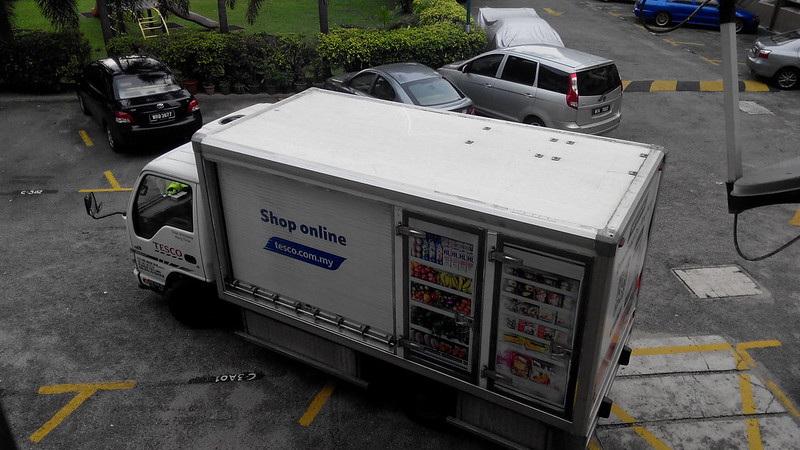
A Tesco truck pulling up in front of my apartment block.
Hi guys, today I'm going to rave about Tesco's home delivery service. I've ordered groceries from them at least 10 times now and so far, I'm really happy with the service. There are so many benefits to grocery shopping online that I highly recommend it.
Here are just some of the benefits of ordering your groceries online:
1. You don't have to drive to the mall and find a parking spot
2. You don't have to search the aisles for the things you want
3. You don't need to line up at the cashier
4. You don't have to lug heavy groceries in and out of your car
5. You can keep tabs on how much you're spending
6. You can add our favourite items to a virtual list, so you can find them again easily
7. It'll save you time
8. You can get online discounts (sometimes Tesco gives out discount codes)
9. You can compare prices between goods
10. You can immediately see what's on sale or if there's a promotion
11. It'll save you money, as there are no impulse buys.
Now that I've been ordering our groceries online, we don't have to spend time dragging the kids around a hypermart. Instead, we're able to be more leisurely on trips to the mall. We have lunch or dinner, do a bit of window shopping, and that's it.
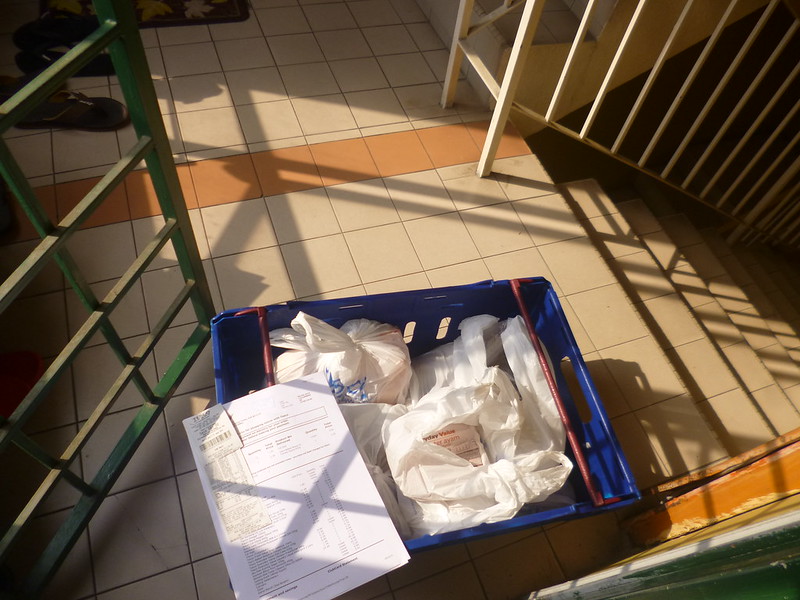
Groceries delivered right to my doorstep! Gotta love it!
But are there any cons to online grocery shopping? How about freshness? What if something's not in stock? These are the questions I frequently get asked. And my answer is, the pros totally outweigh the cons. The only con I can actually think of is, sometimes things aren't in stock. For dry goods, they'll bring you a replacement, which you can choose to accept or reject. I once accepted a replacement for orange cordial and it was a brand I would never buy... and it tasted awful! Lesson learnt.
However, for fresh groceries, they don't bring replacements. A few times I ordered some fish, and they didn't have them. So if you're ordering fish for dinner that night, be sure to have a back up order or plan. As for freshness, it's never been an issue for me. You see, the people who pick the groceries for you at Tesco's are specially trained, so it's as good as (or even better than) picking things out for yourself. I would recommend this service to anyone, but I think it's especially useful for the elderly, people with disabilities, busy stay home mums taking care of the kids and those who work from home.
To learn more about how Tesco home delivery works, check out this video:
I love making my own baby food for Arif, who's turning one at the end of this month. Not only is making your own baby food cost effective, but it enables you to create your own recipies too. Arif's still not too keen on chunky textures, so I am sticking to thick purees for now. I usually steam his veges and fruits, but occasionally, I make vegetable porridge - in my rice cooker!
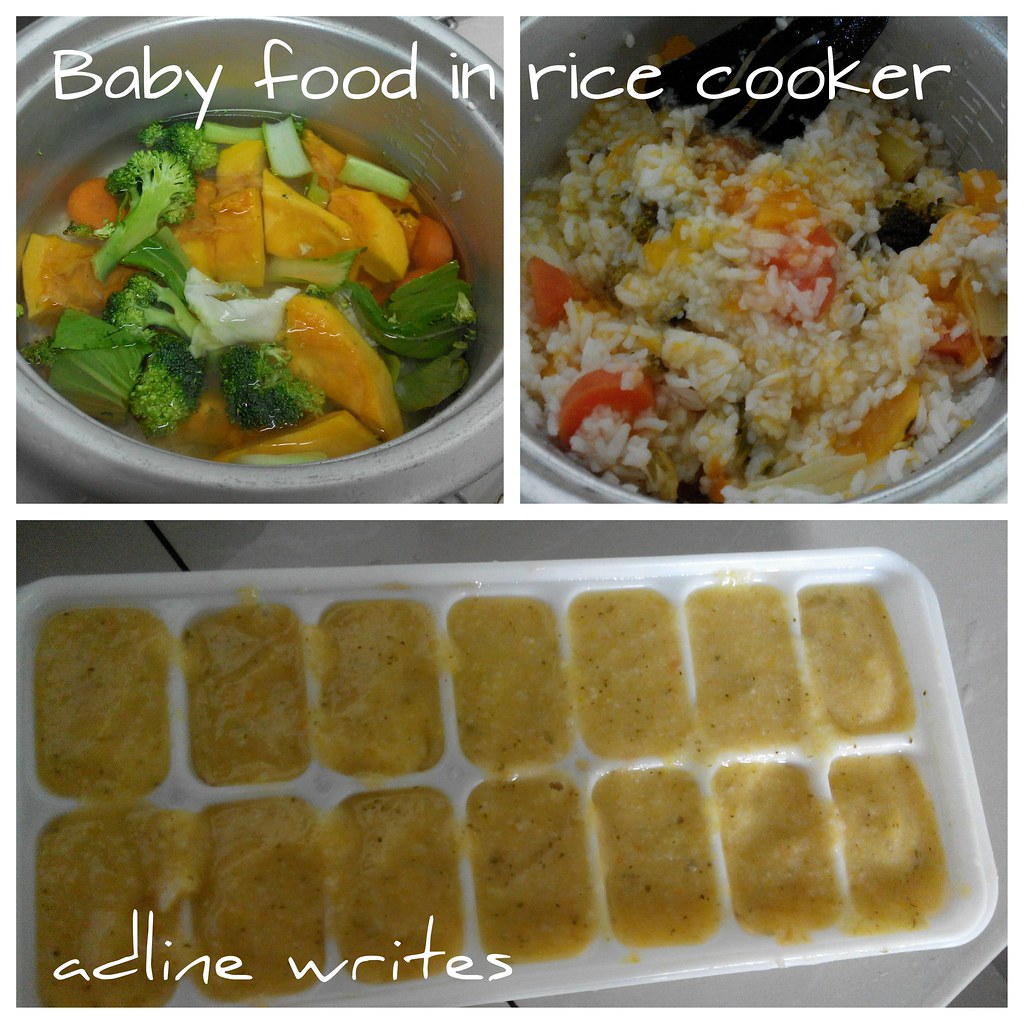
Here, I've combined a cup of rice, broccoli, pumpkin, carrot and bok choy. It turns out bok choy wasn't a good addition, as it left some strands of fibre. I'll leave it out next time. Perhaps spinach would be a better substitute for a leafy vege.
Then, I just add water to cover the ingredients, press cook and let the rice cooker do its thing. Once the porridge is done, I let it cool and then blitz it in the blender, with some extra boiled water. Lastly, I pour the pureed porridge into an ice cube tray and freeze. Voila! Baby food for a week :)
Can you believe it? Arif's now 6 months old (adjusted age 4 months)! With a preemie, it can be hard to tell when to start him on solid foods. These days, mums are often told that we should wait until our babies are 6 months old before we start solids. But our mums tell us that they started feeding us solids at a much younger age, and we turned out fine. But as preemies have an adjusted age to consider, to me, it all boils to a bit of research and my intuition.
When Arif reached 5 months and a half, I decided to start him on solids because he still seemed hungry after having milk and he has been stuffing everything he can grab into his mouth. Of course, I read up on what foods to introduce and how much. I introduced the solid foods to him little by little, and I'm happy to report that he's taken to them really well! Now he eats a fair amount! So far, he's had pureed rice porridge, sweet potato, bananas, apples and carrots.
I decided to make all his baby food myself, but since I don't own food processor, I had to be a little inventive in the kitchen. I've managed to make all his purees by hand and it's really quite easy to do. All you need is a few kitchen tools and some elbow grease. Here's how I do it:
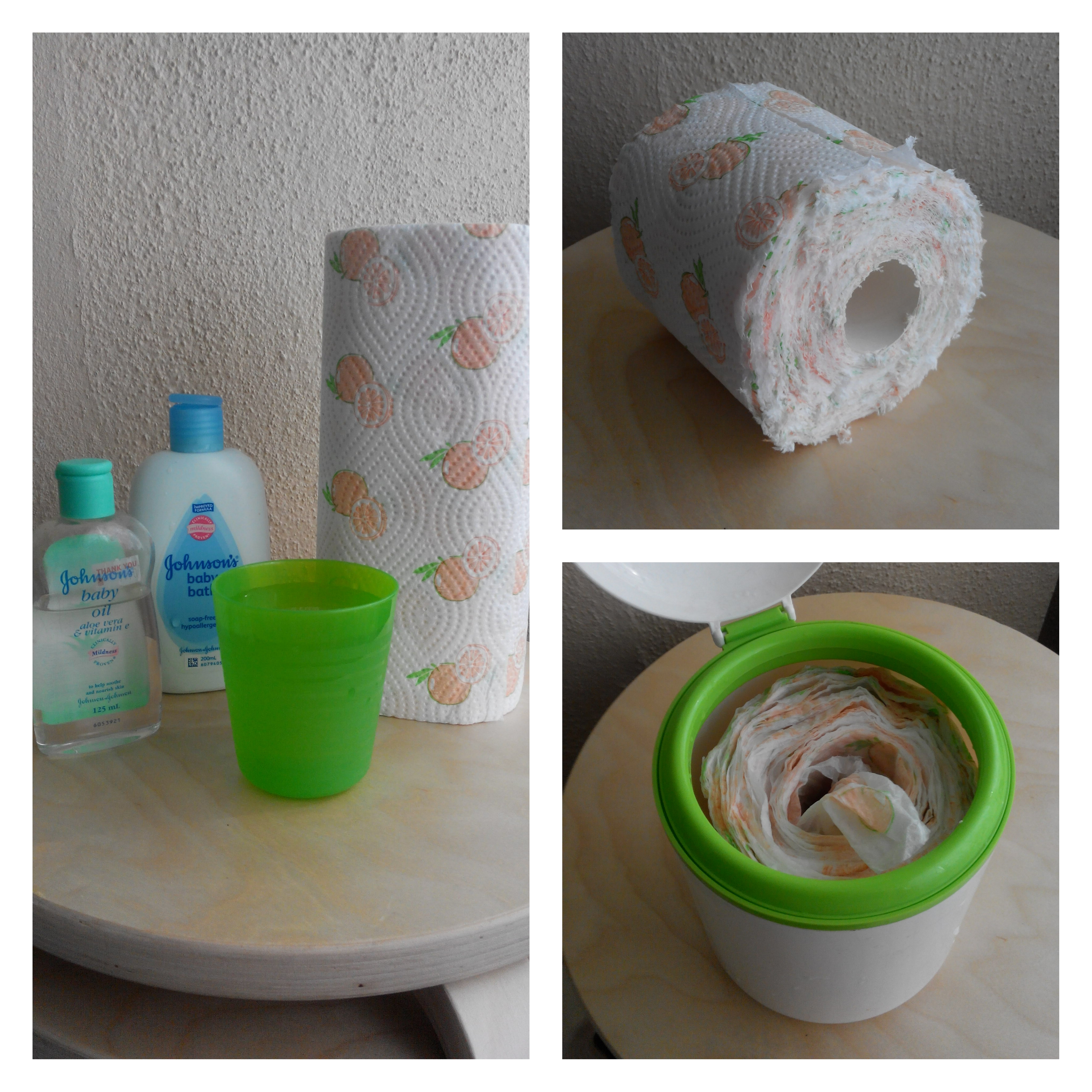
I've been trawling the Internet from some frugal living ideas and I decided to try my hand at making wet wipes that I can use for clean ups during diaper changes. For my DIY disposable wet wipes, I used this basic recipe that I found online:
Kitchen towel (it's best to use the best quality you can find, as it would be sturdier, but for this experiment I bought the cheapest brand I could find!)
1 tablespoon baby bath
1 tablespoon baby oil
1 1/2 cups of water (it's best to use distilled or at least filtered and boiled)
If you would prefer a more natural/organic approach, you could use an organic baby bath and baby oil. Or, you can substitute the baby oil with coconut oil and a drop of tea tree oil, like this.
Steps: 1. Cut the kitchen roll in two using a serrated bread knife. 2. Mix the baby bath, baby oil and water together. 3. Soak the kitchen roll (cut side down) in the solution for about 10 minutes. You might want to turn the roll upside down a few times to let it soak through. 4. Remove the cardboard tube inside.
Put your roll in a resealable container and it's ready to use! Be sure to pull from the centre.
Cost of my DIY wet wipes
Kitchen towels (First Choice brand from Giant): RM7.99 for 4 rolls
Cost per roll: RM1.99
Cost 1/2 roll: RM0.99
Johnson's Baby oil (125 ml): RM7.65 / *8 tablespoons = RM0.95 sen per tablespoon
Johnson's Baby bath (200 ml): RM7.20 / *13 tablespoons = RM0.55 sen per tablespoon
* 1 tablespoon = 15 ml
Cost per DIY wet wipe roll: RM1.00 + RM0.95 + RM0.55 = RM2.50 per roll
Savings
The most cost-effective baby wipes that I could find in Giant is their house brand, which costs RM5.99 (150 pcs). So, as a comparison, I can save up to RM3.49.
Notes:
The Giant baby wipes usually lasts around 2 weeks in my home, so I'm eager to see how long my DIY wet wipes will last with daily use. I'll also be checking for any adverse reactions from my baby to the wet wipes. I'll post an update once I'm done with my first roll.
Update: The roll lasts for between one to one and a half weeks. I also use it to wipe furniture surfaces to rid them of dust and to clean my hands etc. So far, my baby has not shown any allergic reactions to the home-made wipes.
I just love lemongrass, don't you? It adds a distinct flavour to dishes, it's no wonder why it's such an important ingredient in Malaysian cooking. The thing about this fragrant herb, however, is unless you have a lemongrass bush growing in your garden, it can be hard to have it around all the time. There is, however, a way to keep your lemongrass last longer in the fridge - saving you money and keeping it on hand.
It's super easy, let me show you how after the jump!
Now that I'm a work-at-home mum, I've become more aware of our grocery bills and I do what I can to prevent food wastage. When it comes to savings, every little bit counts, so today I'd like to share with you a frugal tip that I've been utilising for quite some time now.
Ginger is an important part of Malaysian cooking, so I always keep it on hand. However, I only need to use a bit of it at a time and ginger doesn't really keep well for long periods. It either shrivels up and dries out, when I leave it on the kitchen counter, or becomes icky and moldy when it sits in the fridge for too long. To make sure that I get to use every bit of my ginger, with no wastage, here's what I do!
See how not to waste ginger and keep it fresh for longer after the jump...
Every time I buy a chicken at the supermarket, it will come with a pair of chicken feet, which is fine with me, because I love the stuff! A big bunch of chook feet has been sitting in my freezer for a while, taking up space, so I vowed to use them all up.
Here's what I made with them. Check out the recipe after the jump!
We went grocery shopping at 1 Utama yesterday, and my entire body still hurts from the experience, but I woke up this morning with my heart set on making... pickles! To be exact, petai(stinky bean) and gari(ginger) pickles.
Here's the result! Find out how to make these after the jump!
Months ago, I came across a tip on Pinterest on how to make an all-purpose household cleaner using orange peel and vinegar. It seemed like a great idea, so I decided to give it a try. My son loves oranges, so I have a steady supply of peels.
What you need to do is just put the orange peels in a bottle and soak them in vinegar for about a week. Most bloggers who live in cooler climates would recommend soaking them for 2 weeks. But, for hot and humid Malaysia, I find that a week is just fine. If you decide to soak them for longer though, that's fine too :)